
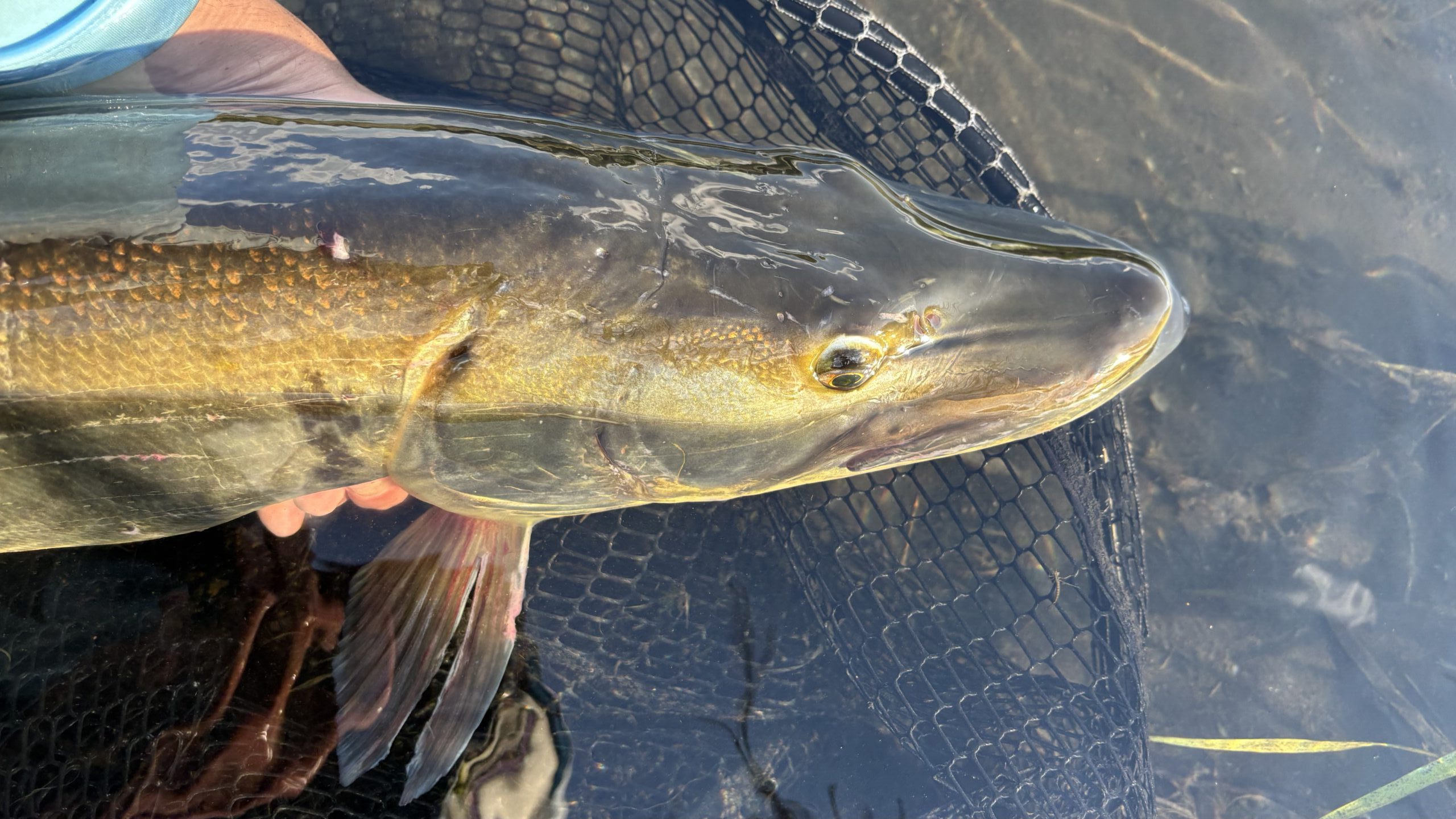

We all want to find the biggest fish in the river. Especially after how easy YouTube makes it look! However, being prepared for the encounter is key to capitalizing on your shot at hooking and landing trophy fish.
The following tips and tricks will help you in any environment, but fishing in the salt presents its own plethora of nuances. Check out these tips and tricks for landing big fish in freshwater environments. Obviously, this is not a comprehensive guide since every environment and situation can provide various challenges.
Going Fishing
In order to hook a monster, you’ll need to get off the couch. It’s important to put yourself in as many situations to succeed as possible. No, it doesn’t happen every time. But when it does, you’ll be glad that you put in the effort. “You wont know until you go”, as they say. Whoever ‘they’ are…..
Rigging up For Success
Put on polarized glasses. Tie every knot with intention. Make sure that all hooks are extremely sharp. If you are using a leader from the last time you were out, make sure that there are no weak points. If any weak points are found, re-tie. Your rig should be as perfect as possible.
Knowing Your Reel
Before you need to put a fish on the reel, it’s important that you familiarize yourself with the Set your reel’s drag appropriately prior to starting to fish. This way, you will not have to deal with this when the time comes, allowing you to focus on the fight. Pull some line out and tighten the drag just enough to allow for a fish to run without breaking your tippet. Species, tippet strength, and the environment will all play a factor in the amount of drag you will need during the fight. If you know the ins and outs of your reel, you’ll be prepared to make split second adjustments that can help tip the scales in your favor.
Reading Water
Now that you’ve gotten to the spot, and rigged up, you’ll want to start scanning the water for potential big fish hangouts. In rivers and streams, large fish like reprieves in current that can also serve as a buffet line. If you find a reprieve They do not like expending unnecessary energy and are opportunistic when feeding.
In lakes and ponds, target any obvious structure you may see. Fallen timber, boulders, and drop offs are all repeat offenders for holding big fish. You’ll want to cover some water to see if you can spot any cruising fish.
Sight fishing is a whole other story. It’s the pinnacle of fly fishing and if you can get eyes on a giant fish, it can trim down the potential time you’ll take fishing ‘blind’. If you see a big fish, calm your nerves and study its movements and behavior. How deep is it? Is it actively feeding? What species is it? The answers to these questions will help you in the next step to engaging with your trophy.
Choosing the Right Fly
If you notice that there is any abundance of a particular food source- hatching flies, lots of minnows, grasshoppers springing from the brush- you should start by mimicking that food source. Chances are the fish in the area are familiar with that food source and are likely to bite an imitation. If you do not see any obvious items on the menu, you can check under water for any nymphs or crawfish that may be hiding under rocks. If you find any, you’ve got a good place to start.
Presenting the Fly Properly
Now, you’ll need to perform some subconscious calculus, even if math wasn’t your favorite subject in school. Placing the right fly in the right spot is not always an easy task. Wind, current, and water depth will all play a part in where you land your fly. Be sure to take all of those factors into account and then make the casts count. If you are throwing a nymph, you’ll want to account for the fly’s weight so that you ensure it gets into the feeding lane.
checking Your Rig for Failure Points Throughout the Day
Have you casted into a tree? Got hung up on a rock? Walked through some tough underbrush? Chances are, the answer is yes on any given day. Constantly run your fingers over your leader to check for abrasions/wind knots. Test the points of your hooks to make sure they are sharp. Sometimes, your bobber (or “strike indicator”) can put weak points in your leader. Rig awareness is a big part of being ready for a big fish whenever your fly is in the water.
The Hook set
The Strip Set
If fishing a streamer, you’ll need to strip set when a fish eats the fly. To strip set, keep your rod tip low and pointed toward the fly to eliminate slack. The instant a fish strikes, pull the line sharply straight back with your non-casting hand while holding the rod flat and still. Never lift the rod tip- you lose all of your setting force and will typically fail to drive larger hooks into a predatory fish’s mouth.
The Trout Set
If using a nymph rig or a dry fly, you’ll need to trout set. Smoothly lift the rod tip upward or laterally with your casting arm the moment a fish takes your fly or your strike indicator (or bobber) dips. Unlike the direct pull of a strip set, this technique relies on the rod’s flex and spring tension to drive fine-wire hooks into a fish’s mouth without snapping thin, delicate tippet. It is the standard method for dry fly and nymph fishing, instantly creating tension while protecting light leaders from breaking during a strike.
Fighting the Fish
Now that the fish is hooked, it’s time to go toe to toe with your opponent. To fight a big fish on a fly rod, apply steady side pressure by keeping the rod low and angled parallel to the water. This forces the fish to pull against the heavy butt section rather than the delicate tip. Clear any loose line onto your reel immediately so the drag can safely absorb violent runs, keeping your hands away from the spool while line is moving.
Continuously change your pulling angle opposite to where the fish wants to swim to turn its head, using the rod’s backbone to wear the fish down quickly without snapping your leader or breaking your rod. Large fish can explosively run in different directions. One of the fastest ways to lose a trophy is keeping your hand is on the reel’s knob. The fish can break your line during a quick/unexpected run. Let the reel do the work!
Landing the Fish
Carry a proper-sized net (or just a net in general). Big fish require a big net; losing a fish at the net due to being under-gunned the last thing you want to experience.
The buddy system helps you land big fish a lot easier than dealing with it all solo. Fishing with other people can also help you learn and have fun. It will also lead to successfully landing big fish more often. Teamwork makes the dream work! Work with your fishing buddy to corral the fish to some soft water. Do not rush landing the fish, no matter how many heart palpitations you may experience. When the fish is ready, net it head-first; this is crucial!
Releasing the Fish
To properly release a fish, follow the “Keep ‘Em Wet” rule by keeping the fish submerged or over the water as much as possible, handling it only with wet, bare hands to protect its protective slime coat from damage and infection. Avoid squeezing the belly, touching the sensitive gills, or laying the fish on dry rocks or dirt; instead, use a rubberized mesh net and forceps for quick, gentle hook removal. If lifting the fish for a brief photo, limit air exposure to under five seconds and always support its body horizontally before reviving the fish facing upstream in gentle current until it swims off under its own power. We always say that hold your breath whole dealing with a fish out of the water to remind yourself to keep them out of the water for as little as possible. Proper catch and release ensures that our fisheries will be healthy and that there will be more big fish for all of us in the future!
Leave a Reply
You must be logged in to post a comment.